


Your client looks you up on Google before the first meeting.
What they find there determines whether they trust the firm or keep searching. Law firms, investment managers, consultancies, architecture practices, family offices, audit firms. In sectors where what is sold is trust, the digital presence starts working long before the first meeting — and what it communicates, in the register it communicates it, decides the commercial relationship.
How trust is earned before the first contact.
A corporate client does not compare catalogues or prices. They compare solidity, track record, judgement. They reach the website through a referral or a targeted search, and in the first 30 seconds they decide whether the firm enters the short-list or is discarded. The architecture, the typography, the restraint of the copy and the transparency of the team information matter more than any commercial pitch.
What is said. And what is not said.
In sectors where what is sold is trust, the register weighs more than the literal content. The same concept explained in two different registers conveys radically different things — and corporate clients detect the register in the first sentence. These are the two registers placed side by side.
The institutional website is structured like the firm.
A real corporate website is not a brochure. It is a structure of core sections that reflect how the firm is organised — its practice areas, its team, its notable cases, its publications. Each section with its own purpose and its own URL, not as hidden tabs inside a single "about us" page.
Origin, track record, values. No stock photos or slogans.
Each area with methodology, client type and representative cases.
Each partner with credentials, areas and publications.
Operations documented with the detail authorised by the client.
Signed articles, conference appearances, positions taken.
Direct line to the management. No generic forms.
What is published. And what is withheld.
In the corporate sector, what is NOT on the website is as important as what is. A client with a discretion policy, operations under NDA, ownership of the data, express authorisation for case write-ups — it is all decided before a single page is drafted. This is the editorial policy agreed with each firm.
Lavalla Group — four decades of family wealth management.
A group with two holding companies and three generations of direct management in Barcelona. Real financial solidity and zero digital presence. When a financial institution or a potential partner searched for "Lavalla", they found silence. The website explains who they are, how they work and what makes up the group — with the restraint the sector demands.
Institutional digital presence for a family holding group with a discretion policy.
Bilingual ES/CAT website with proprietary code. Editorial structure edited in detail: the group's track record since 1986, three generations documented, two companies with their activities, wealth-management criteria. No team photo, no figures, no commercial pitches — discretion is the policy.
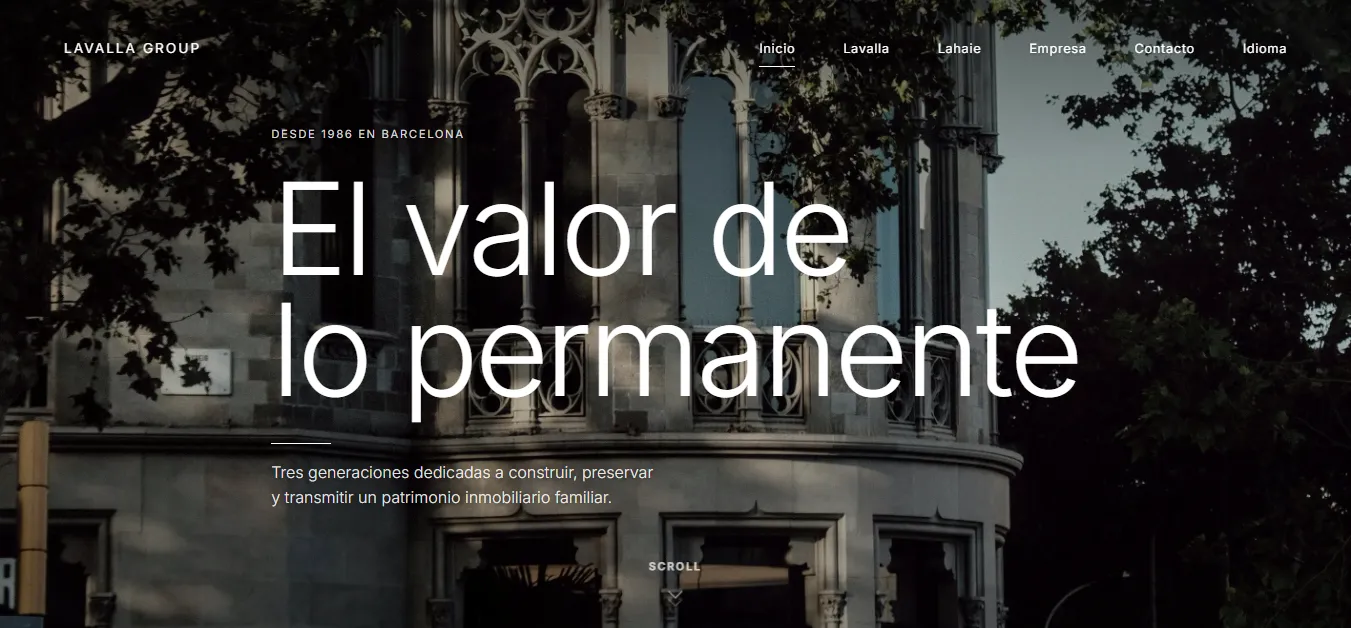
LavallaGroup.com
Bilingual institutional website of the family holding group from Barcelona. Proprietary code, restrained editorial architecture and a discretion policy applied in detail. No team photo, no figures, no commercial pitches — discretion is the policy.
See the project in production →Which firms this methodology applies to.
The methodology is the same. The depth of the analysis and the editorial policy adapt to the firm profile. These are three typical profiles in the corporate sector where the prior editorial work decisively changes the perception the digital presence generates.
Professional practice · legal, tax, strategic consulting.
A firm with distinct practice areas, a team of partners with credentials and a track record. National and international corporate client. It needs to convey technical solidity, methodology and discretion — without falling into the commercial brochure.
Investment manager · family office · wealth management.
An entity with high-net-worth clients and a discretion policy. Decades-long track record, multigenerational management. A restrained institutional website, with no commercial pitches, with a strict editorial policy on what is published and what is withheld.
Strategic consultancy · architecture · engineering.
A firm with its own methodology and a portfolio of representative projects. Large-account B2B client. It needs a website that documents technical capability, a qualified team and notable cases — with the detail each client authorises for publication.
The methodology is the same · the editorial policy adapts to each firm
What a firm asks before engaging.
What level of confidentiality is respected during the project?
What information about the team is published?
How are practice areas published without falling into the commercial brochure?
Do you work with family groups or multigenerational structures?
The institutional website is the base. The editorial policy keeps it alive.
A corporate website that is published and not operated loses freshness within 12-18 months — outdated publications, past conferences, closed cases. Monthly editorial maintenance, new publications, updating of milestones and track record — part of the ongoing digital management service adapted to the corporate sector.
Does the firm have the digital presence it deserves?
A first conversation with no commitment. The firm and the context are understood, and we define which of these services — or combination of them — makes the most sense for your case.